


Elisa Iannacone
Elisa is the recipient of the Alfred Fried Peace Medal (2024), a Nobel Peace Prize Legacy recognition, awarded in partnership with the Austrian Parliament and UNESCO. She is the winner of the Global Peace Photo Award for both Series and Photo of the Year ('24-'25), and her work is displayed in the Austrian Parliament and South African Constitutional Court's Permanent Museum Collections.
As an experienced journalist and cinematographer, she has developed a personal voice that combines journalistic interviews with magical realism, to address current affairs in a unique and impactful way. By delving deep into personal narratives and global events, she captures the essence of trauma and resilience, transforming raw interviews into compelling artistic expressions. Through her innovative approach, Elisa uses art not only to approach critical issues, but to explore the emotional and psychological layers of these stories, offering audiences a profound and immersive understanding of the subjects she covers.
As an experienced journalist and cinematographer, she has developed a personal voice that combines journalistic interviews with magical realism, to address current affairs in a unique and impactful way. By delving deep into personal narratives and global events, she captures the essence of trauma and resilience, transforming raw interviews into compelling artistic expressions. Through her innovative approach, Elisa uses art not only to approach critical issues, but to explore the emotional and psychological layers of these stories, offering audiences a profound and immersive understanding of the subjects she covers.
Hope in the Rubble
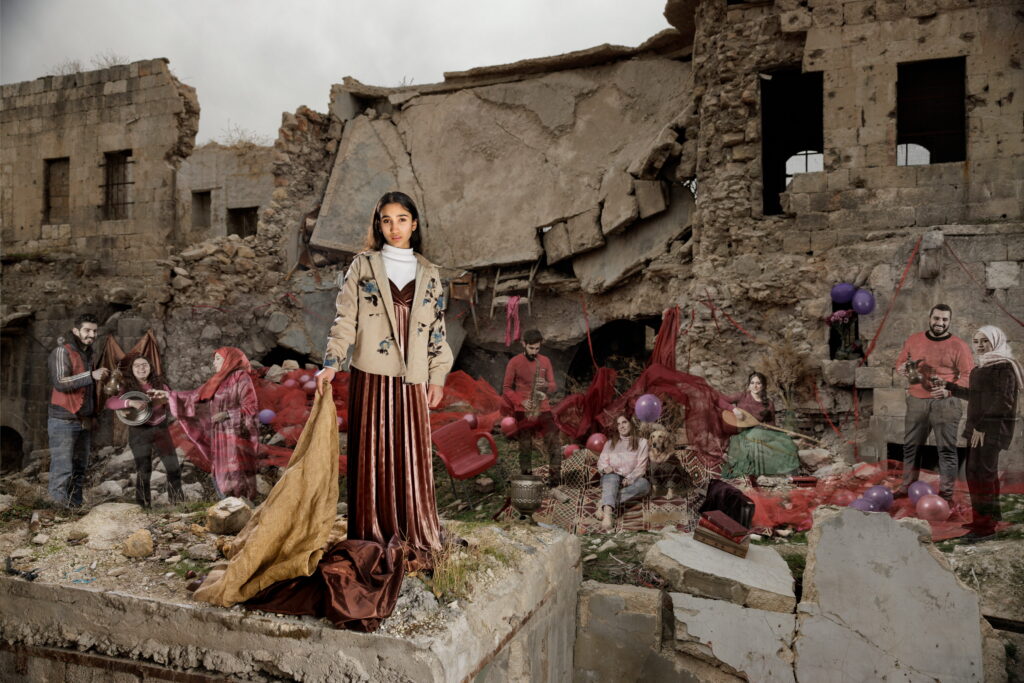
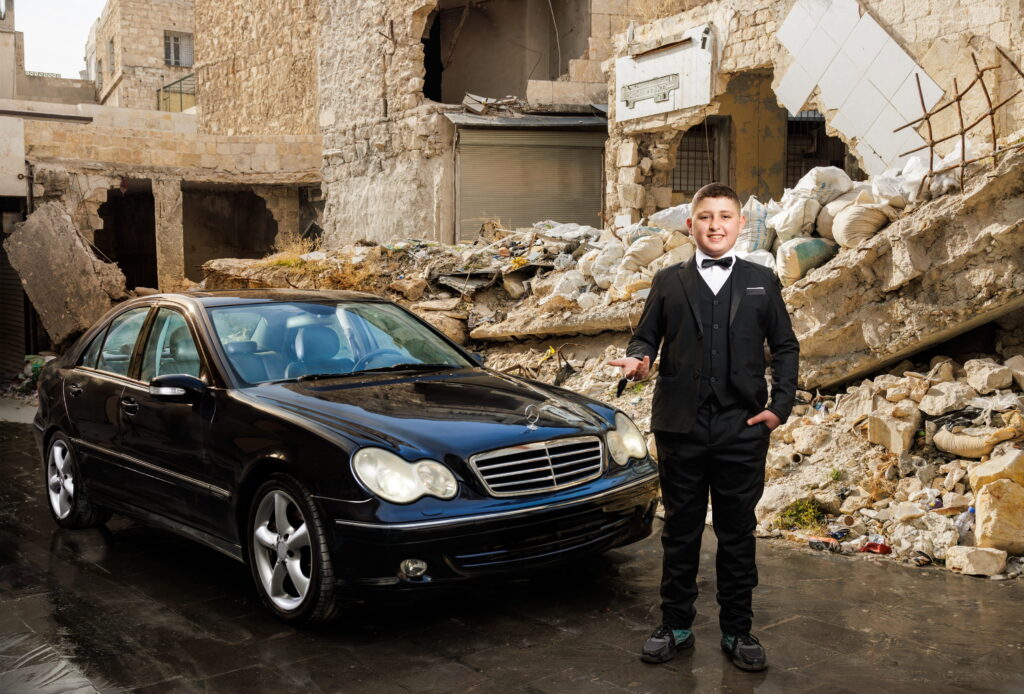
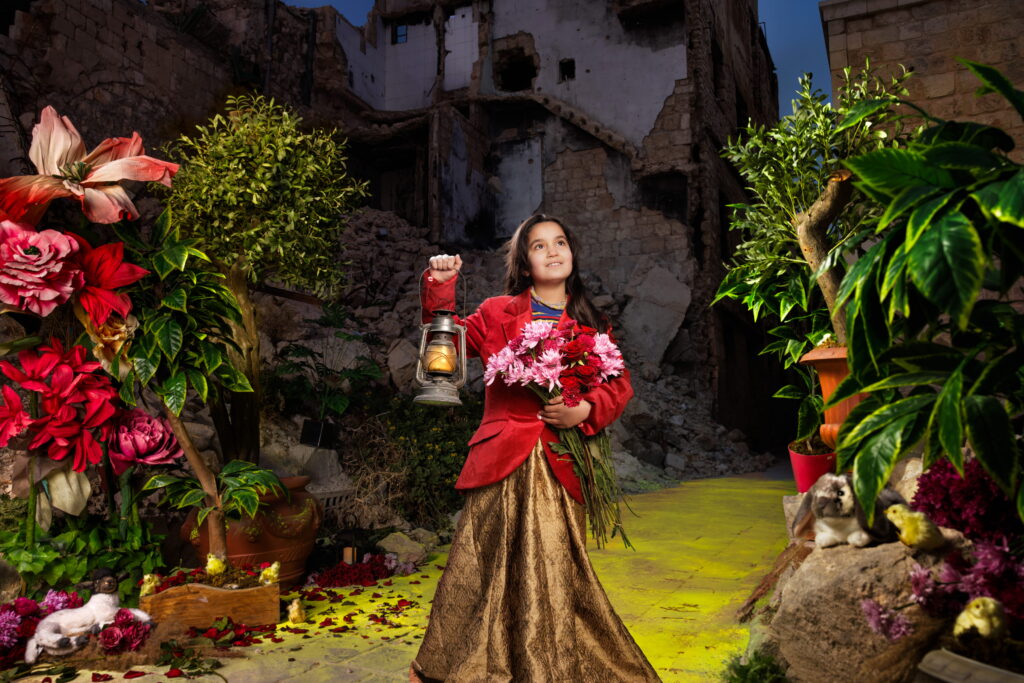
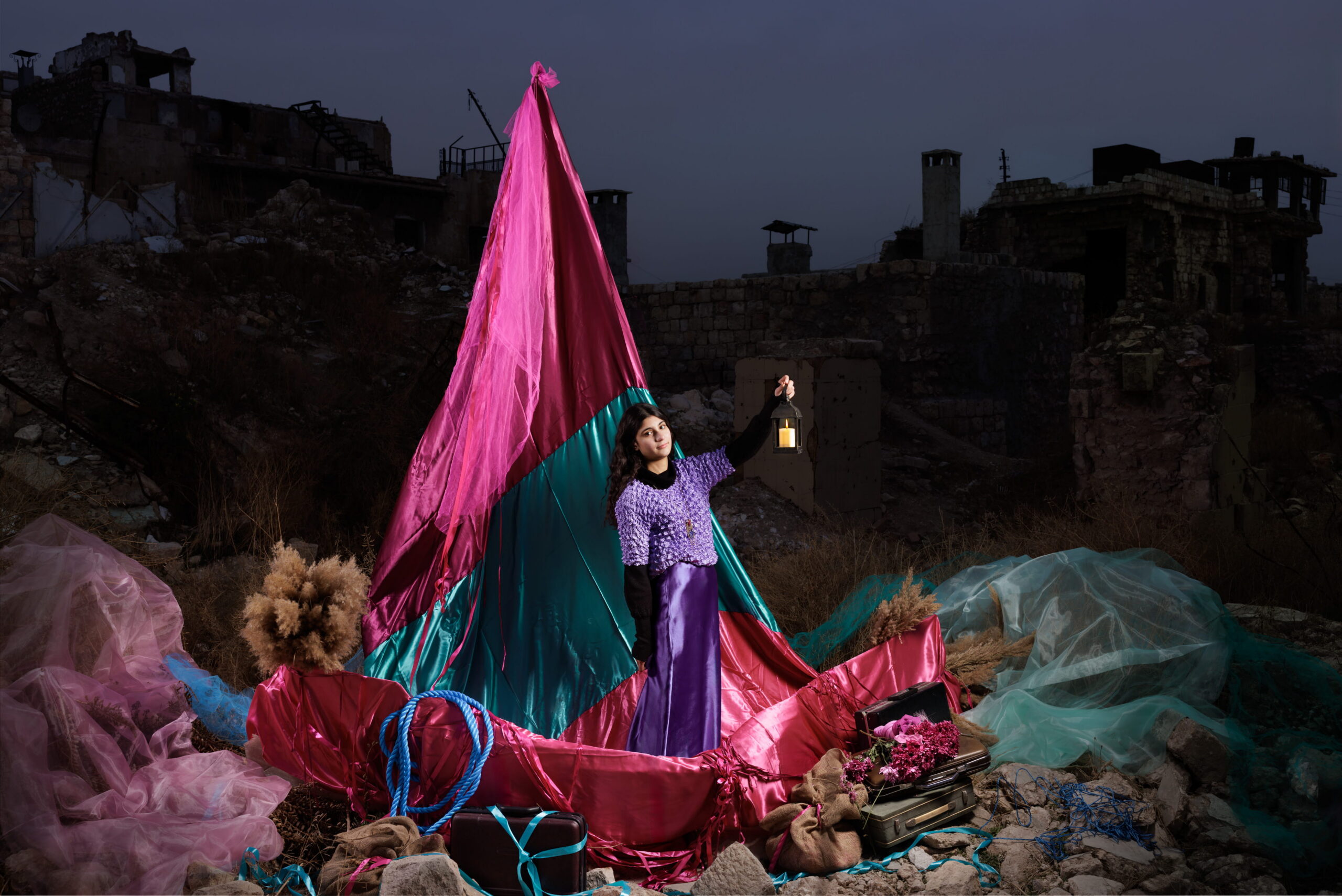
This work examines the intersection of trauma, memory, and imagination through visual storytelling, reframing lived experience as emotional truth. Rooted in a Latin American sensibility, it draws on magical realism to approach trauma not as spectacle, but as testimony—unfolding through the symbolic and the poetic.
In Hope in the Rubble, I create meticulously staged environments in collaboration with young survivors and children affected by war. The Syrian chapter of the project was developed clandestinely over several years, concluding only after the fall of the Assad regime. In Ukraine, the work was produced amid nightly bombings and air-raid sirens—conditions that mirror the children’s daily reality.
Rather than focusing on visible devastation, the work turns toward the silent psychological toll of conflict. The child is not positioned as a passive victim, but as a co-author. Through sustained conversations—at times supported by art therapists—children articulate their dreams, fears, and inner worlds. Every prop and costume is real and placed in situ; these scenes are not fantasies, but acts of resistance, where imagination becomes a means of survival.
These photographs function as conceptual interventions—acts of reclamation in which the camera becomes a tool of agency. Ultimately, the series bears witness to the human capacity to endure: to build invisible worlds of beauty and meaning, even when the world outside offers none.
In Hope in the Rubble, I create meticulously staged environments in collaboration with young survivors and children affected by war. The Syrian chapter of the project was developed clandestinely over several years, concluding only after the fall of the Assad regime. In Ukraine, the work was produced amid nightly bombings and air-raid sirens—conditions that mirror the children’s daily reality.
Rather than focusing on visible devastation, the work turns toward the silent psychological toll of conflict. The child is not positioned as a passive victim, but as a co-author. Through sustained conversations—at times supported by art therapists—children articulate their dreams, fears, and inner worlds. Every prop and costume is real and placed in situ; these scenes are not fantasies, but acts of resistance, where imagination becomes a means of survival.
These photographs function as conceptual interventions—acts of reclamation in which the camera becomes a tool of agency. Ultimately, the series bears witness to the human capacity to endure: to build invisible worlds of beauty and meaning, even when the world outside offers none.
Find out more